
Amidst the stalling of high-level peace talks between Tehran and Washington, Iran continues to endure severe digital isolation as the nationwide internet blackout reached its 44th day on Sunday.

These transfers can be seen as part of a continuing process on General Asim Munir's part to keep his senior generals happy, notes Rana Banerji, who headed the Pakistan desk at RA&W.

US Secretary of State Marco Rubio said that discussions aimed at halting the conflict with Iran have shown "some slight progress," while simultaneously echoing Washington's dissatisfaction with its NATO allies.

Iran has announced the Strait of Hormuz is open to commercial vessels, coinciding with a ceasefire between Lebanon and Israel.

The delegations from the US and Iran head to Islamabad on Friday, carrying a ceasefire that is already fraying, a Strait that is technically open and practically closed, and a negotiating agenda that would challenge even parties actually negotiating in good faith, which these groups are not. Prem Panicker continues his must read blog on the Iran War.

Trump seems to have estimated that Ghalibaf is a pragmatic politician who is receptive to close relations with the US and is enthusiastic about fostering business and economic ties in particular, points out Ambassador M K Bhadrakumar.

Pakistan's Air Force Chief Zaheer Ahmed Baber Sidhu visited the US to enhance bilateral defence cooperation, following a similar visit by the Army Chief. The visit included meetings with US military and political leaders to discuss regional security, counter-terrorism efforts, and future cooperation.

US President Donald Trump on Wednesday backed Israel's ongoing military operation in Lebanon, stating that Hezbollah "was not included" in the recent ceasefire deal between Washington and Tehran, which halted the conflict in West Asia for two weeks.

Hours after ceasefire, US President Donald Trump on Wednesday warned against any country supplying military weapons to the Islamic Republic, stating that he would impose a 50 percent tariff on all goods exported to the United States.

Israel will continue its offensive in South Lebanon aimed at neutralising the threat from Hezbollah, which is backed by Iran.

The Ministry of External Affairs (MEA) has stated that India is closely monitoring developments in West Asia, addressing topics ranging from ceasefire efforts to maritime security and the safe return of Indian nationals. The MEA also addressed the UN Climate Change Conference and the delimitation bill.

'Pakistan has found itself in a favourable position after Operation Sindoor by appreciating the mediation as claimed by Trump and recommending him for the Nobel Peace Prize.'

Officials from Pakistan, Afghanistan, and China are meeting in Urumqi to discuss regional security concerns and potential confidence-building measures.

Chaffing under public ridicule in the US as well as internationally for having 'lost' the war, Trump is under immense pressure to do something, cautions Ambassador M K Bhadrakumar.

Weeks before the Pahalgam attack, Munir said Pakistan will not forget the issue of Kashmir, asserting, "It was our jugular vein." His comments were trashed by India.
JeM commander Ilyas Kashmiri also said that the Pakistan Army and the jihadis have become one after 25 years of his outfit's struggle.

'The flip side of this is that he won't hesitate to call out India if he thinks its policies are hurting US economic interests or border US foreign policy goals.'

US Secretary of War Pete Hegseth on Wednesday claimed that Tehran "begged" for a truce, maintaining that Washington achieved a "decisive military victory" during 'Operation Epic Fury.'

Pakistan's Prime Minister Shehbaz Sharif has welcomed the ceasefire between the US and Iran and invited delegations from both countries to Islamabad for peace negotiations.

Following a US agreement to a ceasefire, Iran claims victory and outlines conditions for a lasting peace deal, including control over the Strait of Hormuz and the removal of sanctions.
Asim Munir and his brand of short-sighted army officers give no inkling of paying heed, changing course or learning lessons from the past, observes Rana Banerji, who headed the Pakistan desk at RA&W.

Iran's foreign ministry spokesperson Esmaeil Baqaei on Sunday said that the recent meeting with US officials was the longest round of negotiations they have had in the past year.

Trump repeated the assertion that Sharif had claimed he saved "25 million lives" when he stopped the war between India and Pakistan.

India has strongly rejected Pakistan's claims on Kashmir, calling it a Union Territory and dismissing the Pakistan Army Chief's statement about it being the country's "jugular vein." India also rejected Pakistan's claim that Tahawwur Rana, a Mumbai terror attack accused, is a Canadian citizen and that it has nothing to do with him. India's External Affairs Ministry spokesperson stated that Pakistan's reputation as the "epicentre" of global terrorism will not diminish. Rana's extradition is a reminder that Pakistan needs to bring other perpetrators of the Mumbai terror attacks to justice, according to India.
Following the deadly Pahalgam attack, Michael Rubin, a former Pentagon official and senior fellow at the American Enterprise Institute, issued a strong statement and said that 'it is now the duty of India to do to Pakistan and to Pakistan's Inter-Services Intelligence (ISI) what Israel did to Hamas', calling for decisive action against Pakistan's intelligence agency for its alleged role in supporting terrorism.

US President Donald Trump said on Wednesday that Washington is considering a "joint venture" with Iran to secure the Strait of Hormuz, following his announcement of a two-week ceasefire.

The closed-door luncheon meeting came amid escalating tensions between Israel and Iran with Trump exploring Washington's possible involvement.

Pakistan's Prime Minister Shehbaz Sharif chaired a high-level meeting to review regional and internal security in light of recent events in Iran and Afghanistan.
India has issued a strong warning to Pakistan against continuing its 'hateful' rhetoric and any potential misadventures, following recent nuclear threats and remarks from Pakistani leadership.
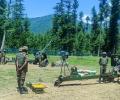
'India's security challenges are no longer confined to the Line of Control or the Line of Actual Control.'
'They also span cyber networks, economic systems, information warfare, technology ecosystems, maritime routes, and internal social cohesion.'
'Can a nuclear-armed nation sustain itself indefinitely under overt military rule without catastrophic consequences for itself and the region? History suggests otherwise.'
A senior Pakistani official has affirmed Pakistan's commitment to supporting Saudi Arabia, even before assistance is explicitly requested, amidst ongoing conflict in West Asia. This pledge underscores the close ties between the two nations and Pakistan's role in regional stability.

Pakistan is set to host face-to-face talks between the United States and Iran, aiming to solidify a fragile ceasefire and prevent further conflict in West Asia. The discussions will focus on a long-term peace arrangement, including sanctions relief, regional security, and Iran's nuclear program.
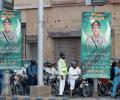
Speculation swirls in Pakistan regarding potential changes in the political landscape, fueled by rumors of the army chief's possible presidential aspirations and discussions between top civilian and military leaders.
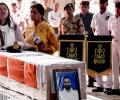
'If Pakistan's army wants to escalate violence in Kashmir, they have an unlimited supply of jihadis they can train and send. That's not an issue for them.'

Pakistan Prime Minister Shehbaz Sharif has once again thanked former US President Donald Trump for resolving the India-Pakistan conflict in May, despite India's consistent denial of third-party intervention.
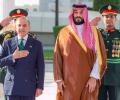
Prime Minister Shehbaz Sharif met with Saudi Crown Prince Mohammed bin Salman to express Pakistan's support for the Kingdom amidst escalating tensions in West Asia, reaffirming their mutual defence pact and commitment to regional stability.
The United States' historical strategic alignment with Pakistan, dating back to the Cold War, has consistently aimed to create a political and military parity with India, despite India's significantly larger size and resources. This long-standing relationship continues to influence regional dynamics, particularly in West Asia and the Indo-Pacific.

Pakistan Hockey Federation president Tariq Bugti has resigned following a controversy surrounding the national team's accommodation during their tour of Australia. b

Russian President Vladimir Putin has offered his support to help bring peace to West Asia, praising the Iranian people for their resilience. This comes as Iran seeks to resolve the conflict with the US, following discussions with Pakistani and Omani leadership.
